
Downhill Racer
Supercent, Inc.Arcade
4.52.02K Reviews
- Version
- 32.2.0
- Installs
- 10.00M
- Age Rating
- Everyone 10+
Screenshots
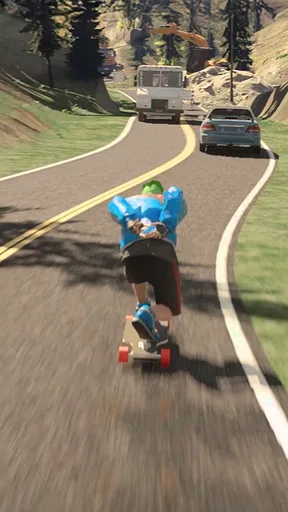
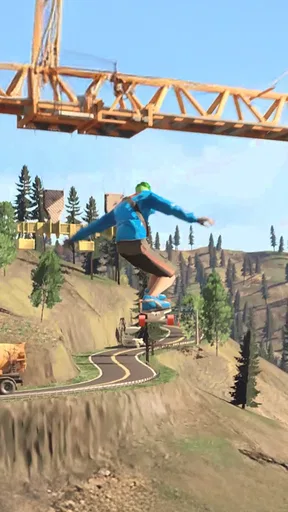

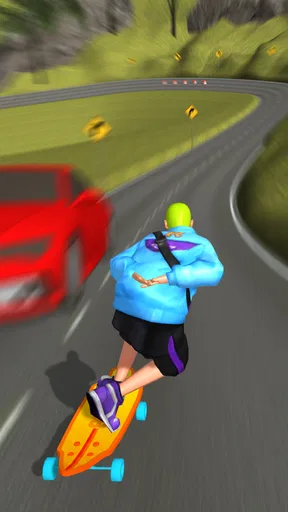
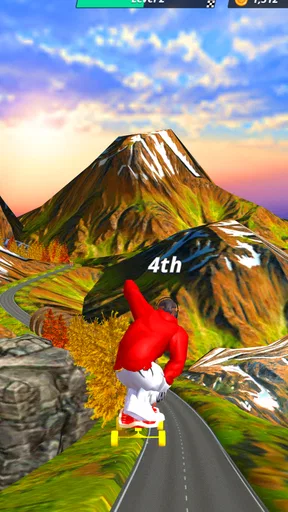
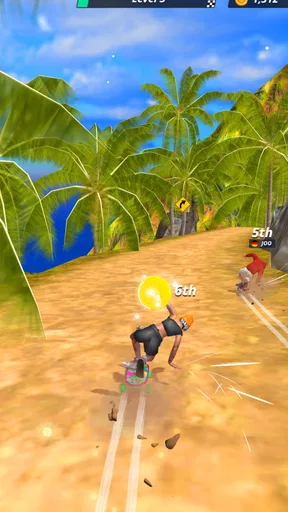
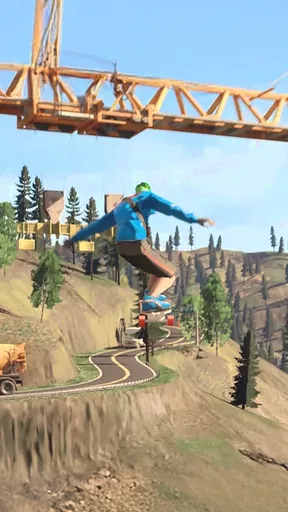

Our Review of Downhill Racer
 Analysis by Appyee
I approached Downhill Racer as a quick arcade game first, but its value became clearer when I paid attention to how comfortably different people can actually play it. The idea is straightforward: guide a skateboarder downhill, react to the course, and try to stay in control through a realistic-looking racing environment. That simplicity makes it easy to understand, while the need for timely reactions can make it less comfortable for some players.
Developed by Supercent, Inc., this free game sits in the arcade category and is available for Android devices running at least Android 6.0. It is rated for Everyone 10+, and optional in-app purchases range from $3.99 to $9.99 per item. The current version is 32.2.0, so anyone installing it should make sure the game has finished updating before judging its performance or controls.
How clearly the downhill experience communicates what to do
The strongest part of the presentation is how quickly the central action makes sense. You are not asked to learn a complicated fictional universe or study a large menu system before playing. The downhill setting gives the game an obvious direction, and the skateboarding theme helps the movement feel intuitive even when the course becomes more demanding.
That clarity matters for players who prefer to learn by doing. I can imagine handing the phone to someone who does not regularly play games and having them understand the basic goal after a short attempt. The arcade format is less intimidating than a large racing game with many modes, vehicles, upgrades, and technical settings competing for attention.
At the same time, simple does not mean effortless. A downhill course naturally keeps the action moving, so there is less time to pause and inspect what is ahead. Players who need longer to process visual information may find the first attempts busy, particularly when the environment, the character, and upcoming hazards blend together. The game is easiest to read when the screen is clean and the phone is held at a comfortable distance.
I found that a short warm-up session is useful before trying to play for a high score. Instead of treating the first run as a test of skill, I would use it to notice the rhythm of the course and the timing expected by the controls. This reduces the pressure to react perfectly immediately and makes the next attempt feel more deliberate.
The navigation experience also benefits from keeping the phone stable. A loose grip can make any arcade control feel less precise, and that is especially noticeable in a game based on downhill momentum. A case with a secure edge or a stand can help players who have difficulty maintaining a steady hold, although the best setup depends on the device and the player’s hand comfort.
For users with visual preferences, screen brightness and display size will make a practical difference. A larger phone can make the action easier to follow, while excessive brightness may cause discomfort during longer sessions. I would adjust the device before opening the game rather than trying to make changes while a run is already underway.
One useful habit is to separate learning the route from chasing performance. On an early play, I would focus on recognizing the next section rather than reacting to every small movement. Once the visual pattern becomes familiar, the game feels less like a sudden stream of surprises and more like a sequence that can be anticipated.
Controls, timing, and different motor needs
Downhill Racer is naturally better suited to players who enjoy quick, repeated input than to people looking for a slow, turn-based arcade experience. The skateboarder is moving through the environment, which means hesitation can have an immediate consequence. That gives the game energy, but it also creates a barrier for anyone with limited dexterity, tremors, fatigue, or difficulty making rapid movements.
I would not recommend beginning with long sessions. Short attempts make it easier to notice whether the required movements feel comfortable, and they reduce the physical strain that can come from gripping a phone tightly. If a player notices that they are pressing harder and harder as the course becomes difficult, that is a good sign to pause rather than force another run.
Players who use one hand may find the experience more manageable when the device is positioned so the active hand does not have to stretch across the whole screen. Larger phones can be awkward in this situation, so a smaller device may actually be more comfortable even if its display gives up some visual space. This is one of those cases where portability and readability do not always point to the same choice.
The game can work well for someone who wants a compact reflex challenge during a break, but it is less suitable for a player who needs generous reaction windows or highly adjustable input behavior. I would especially avoid recommending it as a relaxing game for someone whose hands are already tired from work, study, or another activity.
There is also a difference between physical access and skill access. A player may be able to operate the controls comfortably but still dislike the speed of the action. Another player may enjoy the downhill challenge but need frequent breaks. I think both reactions are valid, and the game’s success depends on whether its brisk pace feels exciting rather than stressful.
One practical approach is to play with the phone resting lightly against a surface while keeping the hands relaxed. This can reduce the need to support the full device weight during repeated attempts. It is not a special game feature, but it changes the experience enough that players with limited grip strength may want to try it.
Visual and sensory comfort during repeated runs
The realistic downhill presentation is part of the appeal, but visual realism can also make a fast arcade game more demanding. Players who are sensitive to motion, contrast, or rapidly changing scenery should test the game in a calm environment and stop if the movement becomes uncomfortable. A game that feels fine for a few minutes may be tiring over a longer session.
Sound can affect concentration too. Some players use audio to stay engaged, while others need a quieter experience to process what is happening on screen. Playing in a low-noise setting can make it easier to distinguish the game’s action from surrounding distractions, but anyone who finds repeated game sounds tiring may prefer to lower the device volume or play silently if the available device controls allow that.
For players with reduced vision, the main question is not simply whether the screen is bright enough. It is whether the character, route, and changes in the environment remain distinct while everything is moving. A larger display and a comfortable viewing distance may help, but I would not assume that either one solves every readability problem. The best test is a short session in the same lighting where the game will normally be played.
People with attention-related needs may appreciate the narrow focus of the game: there is one immediate activity instead of a large amount of text and menu management. On the other hand, the constant movement leaves little room to recover from distraction. I would choose a quiet place and disable unrelated phone interruptions before starting a serious run.
The game’s Everyone 10+ rating makes it approachable for a broad audience, but age suitability is not the same as comfort for every player. Younger players may understand the premise quickly, while adults who dislike reflex-based failure may find the repeated attempts less appealing. The rating helps set a general audience expectation, not a guarantee that every sensory or motor profile will fit.
Where it fits into everyday play
The most convincing use case is a short break. If I had a few minutes before an appointment or while waiting for a friend, I could open the game, play a handful of runs, and stop without needing to remember a complicated story. That makes it more convenient than a longer racing title that expects a substantial uninterrupted session.
It can also suit players who enjoy practicing the same kind of challenge repeatedly. The downhill format gives each attempt a clear purpose: improve control, react earlier, and become more familiar with the route. Someone who likes gradual personal improvement may find that satisfying even without a large collection of modes.
It is less appropriate in situations where attention must remain available for the surrounding environment. I would not play while walking, crossing a street, or doing anything that requires awareness beyond the phone. The fast visual action is a poor match for divided attention, and a missed moment can end a run quickly.
For travel, the game’s free entry point is convenient because a player can try it without paying first. However, the presence of optional purchases means I would be careful when handing the device to a child or to someone who may tap through purchase prompts without understanding them. The game is available at no upfront cost, but that should not be confused with an entirely purchase-free experience.
Players with limited connectivity concerns may also want to prepare before leaving home, but I would not build a travel plan around assumptions about how every function behaves offline. The safer approach is to install and test the game in advance, then see whether the particular device and situation provide the experience the player expects.
The game is a better fit for a phone than for a player seeking a deep console-style racing simulation. Its appeal is immediacy: pick it up, enter the downhill action, and try again. If you want detailed vehicle tuning, a broad competitive structure, or a long career, a more specialized racing game will probably be more rewarding.
Compared with slower arcade alternatives, this one places more emphasis on continuous downhill momentum. Compared with full racing games, it asks for less commitment and less preparation. That middle position is useful, but it also means the game may feel too focused for players who want variety and too active for players who want something gentle.
Friction that can affect an inclusive experience
The main limitation is the lack of control over the basic pace of the challenge. A player who needs more time to interpret the scene may not be able to simply slow the experience down. That makes the game naturally selective: it favors quick reactions and repeated practice rather than flexible pacing.
Another barrier is the difference between understanding the goal and executing it. The concept is easy to grasp, but success still depends on timing. This can be frustrating for players who are comfortable with the visual layout but cannot consistently perform the required movements. I would judge the game by whether the challenge feels motivating after several attempts, not by whether the first run goes well.
Optional purchases may also create a small layer of decision fatigue. A player who only wants a free arcade session may prefer to ignore anything that interrupts the flow, while another player may consider the purchases worthwhile. Since items range from $3.99 to $9.99 each, I would set a personal spending limit before playing rather than making an impulse decision during a frustrating run.
The large install base and strong average reception suggest that the core idea has reached a wide audience. More than ten million installs and a 4.5 average from roughly 485 thousand ratings show that many players find the format appealing. Those figures are useful context, but they do not replace a personal accessibility test: a popular control scheme can still be uncomfortable for a particular player.
Supercent, Inc. has kept the identity focused on downhill skateboarding rather than burying it under complicated systems. That focus is a strength for navigation, but it also leaves fewer obvious alternatives for someone who cannot comfortably manage the central action. If the movement itself is the barrier, there may not be enough flexibility inside the game to transform it into a slower or more forgiving experience.
I would also consider the device itself. Android 6.0 support makes the game available to many older phones, but age alone does not tell me how smoothly a particular handset will display fast movement. A player using an older device should test a brief session for responsiveness and comfort before committing to longer play. If the screen feels cramped or the input feels delayed, a different phone or a less demanding arcade title may be the better choice.
Who should try it, and who should look elsewhere
I would recommend it to players who like short arcade sessions, downhill movement, and the satisfaction of improving through repetition. It is especially appealing if you want a game that can be understood quickly but still asks for practice. The realistic skateboarding setting gives the familiar arcade loop a more physical sense of speed.
I would be more cautious about recommending it to players who need adjustable speed, slower decision-making, or very forgiving controls. It may also be a poor choice for anyone who experiences discomfort from continuous motion or who wants a game that can be played while mentally multitasking.
For a child within the age range, I would introduce it with a clear conversation about optional purchases and encourage play in short sessions. For an older player with limited dexterity, I would test the controls before assuming that the simple premise means the game will be easy. For someone with visual sensitivity, I would begin in a well-lit room and stop at the first sign of strain.
My most useful tip is to treat the first few attempts as a comfort check rather than a performance test. Check the text and action from the normal viewing distance, notice whether the phone is easy to hold, and see whether the pace feels exciting or overwhelming. That quick evaluation tells you more than the store summary does.
After that, use a repeatable setup: the same grip, similar lighting, and a quiet place without unnecessary interruptions. Consistency makes it easier to tell whether improvement comes from learning the course or simply from changing the conditions around the phone. It also helps players identify when fatigue, rather than difficulty, is causing mistakes.
With its free entry, arcade focus, and broad reach, Downhill Racer is easy to sample. I like that it does not demand a large time investment before showing what kind of game it is. Its weakness is equally clear: the downhill action is the entire appeal, so players who need slower pacing or more adaptable input may quickly run into a wall.
My inclusive verdict is positive but specific. This is a good choice for people who can comfortably follow fast visual movement and enjoy practicing responsive controls in short bursts. It is not the right recommendation for every ability or every setting, and I would not pretend that a simple interface removes motor or sensory barriers. Try it with a relaxed grip, a comfortable display setup, and realistic expectations about its speed; if those conditions work for you, the game offers a focused and enjoyable arcade ride.
Verdict
Strengths of Downhill Racer
- Simple controls make it easy for beginners to start racing.
- Fast downhill courses create an exciting sense of speed.
- Short races are convenient for quick gaming sessions.
- Unlockable upgrades give progression a clear purpose.
- Bright visuals make obstacles and tracks easy to recognize.
Limitations of Downhill Racer
- Gameplay can become repetitive after playing the same track types.
- Some upgrades may require considerable grinding to unlock.
- Precision steering can feel difficult on narrow downhill sections.
- Ads may interrupt the experience between races.
- Performance may vary on older phones with limited hardware.
Other Releases by Supercent, Inc.
View All
Snake Clash!
Arcade4.5

Pizza Ready!
Simulation4.4

Prison Life: Idle Game
Role Playing4.0

Dessert Factory Idle
Arcade4.7
Similar Picks in This Category
View All
Subway Surfers
SYBO Games4.6

Stickman Party 234 MiniGames
PlayMax Game Studio4.6

Subway Princess Runner
Ivy4.4

Temple Run
Imangi Studios4.2

Zombie Tsunami
Mobigame SAS4.6

Stack Ball - Crash Platforms
CASUAL AZUR GAMES4.5
Frequently Asked Questions
What is Downhill Racer?
Downhill Racer is a fast-paced racing game focused on descending steep tracks at high speed. Players guide a vehicle downhill, avoid obstacles, collect useful items, and try to reach the finish line without crashing. Its simple controls make it easy to start, while increasingly difficult courses, tighter turns, and more hazards provide a stronger challenge as you continue playing.
How do you play Downhill Racer?
Gameplay generally centers on steering your racer through winding downhill routes while maintaining control and avoiding barriers, ramps, gaps, and other dangers. Depending on the stage, you may need to collect coins or bonuses and complete the course quickly. The controls are designed for touchscreens, so short movements and careful timing are usually more effective than constant swiping.
Is Downhill Racer free to download and play?
Downhill Racer can typically be downloaded without an upfront purchase, allowing players to try the main gameplay before spending money. However, free versions of mobile racing games may include advertisements, optional purchases, or upgrades that accelerate progress. Before installing, check the official Google Play or App Store listing for current pricing, in-app purchase details, and any regional differences.
Can Downhill Racer be played offline?
Whether Downhill Racer works fully offline depends on the version and the features you want to use. Basic racing may be available without a continuous internet connection, but advertisements, cloud saving, updates, leaderboards, or online events can require access to the internet. It is best to launch the game once while connected and review its behavior before relying on it for offline play.
Is Downhill Racer suitable for children?
Downhill Racer is generally easy for younger players to understand because its main objective is straightforward: steer safely downhill and finish the course. Nevertheless, parents should review the store rating, advertising policy, privacy information, and in-app purchase settings before allowing children to play. The difficulty, speed, and presence of optional purchases may also affect whether it is appropriate for a particular age group.
Play our best games!


